How Practice Is Shaped

Why Small Details Come First
GemFormArt is built around careful beginner practice: measuring before cutting, checking edges before polishing, and understanding how small tool movements change a jewelry piece. The course keeps early projects realistic so learners can focus on control, comfort, and finish.
A Practical Bench Approach
Jewelry making can feel confusing when tools, wire, sheet metal, stones, and finishing steps arrive all at once. This course separates the process into manageable actions: sketch the form, mark the material, shape with control, file the edge, test the surface, and check the piece from several angles before adding more detail.
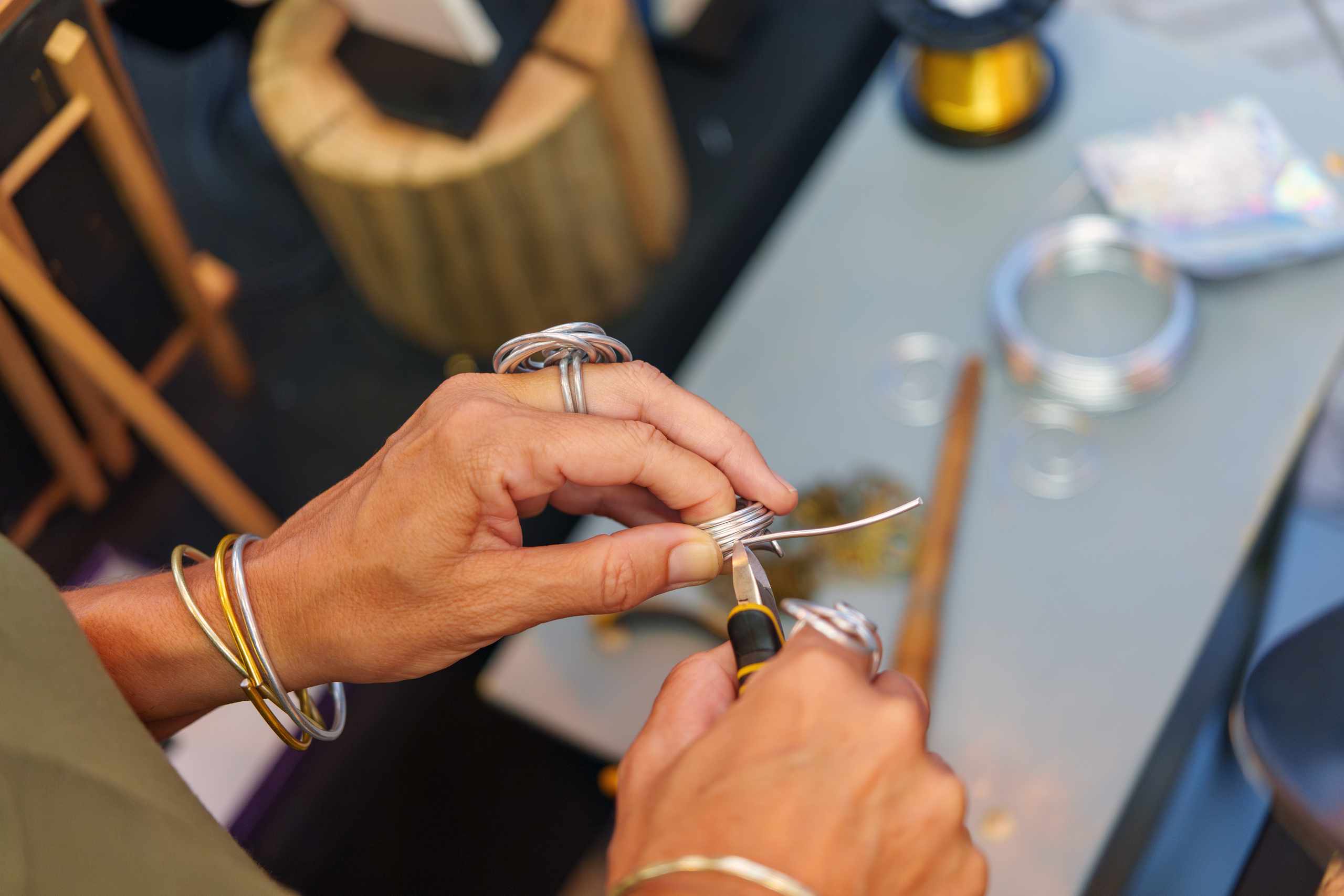
Measure Before Cutting
Practice starts with layout sketches, measurement marks, and room for filing instead of rushing straight into a final shape.
Shape With Control
Wire bends, loops, ring bands, and pendant blanks are repeated in small samples so hand pressure becomes easier to judge.
Finish By Checking
Edges, scratches, symmetry, and wearability are reviewed under light before polishing or adding texture to the piece.
What Guides The Course
The course focuses on tool familiarity, material awareness, safe handling, and realistic small jewelry projects.
Tool Familiarity
Pliers, needle files, saw blades, and polishing cloths are introduced through actions that show what each tool changes.
Material Awareness
Practice wire, sheet metal, jump rings, beads, and simple settings are treated as materials to test before making final design choices.
Safer Work Habits
Sharp edges, sanding dust, small parts, and heat-related concepts are handled with a clean workspace and careful tool setup.
Realistic Projects
Rings, pendants, earring parts, and textures stay simple enough to support practice without pretending to be advanced bench work.
Read More Making Notes
The blog adds practical notes on starter tools, wire gauge, clean loops, edge finishing, sanding stages, simple textures, workspace setup, and choosing first jewelry projects with restraint.